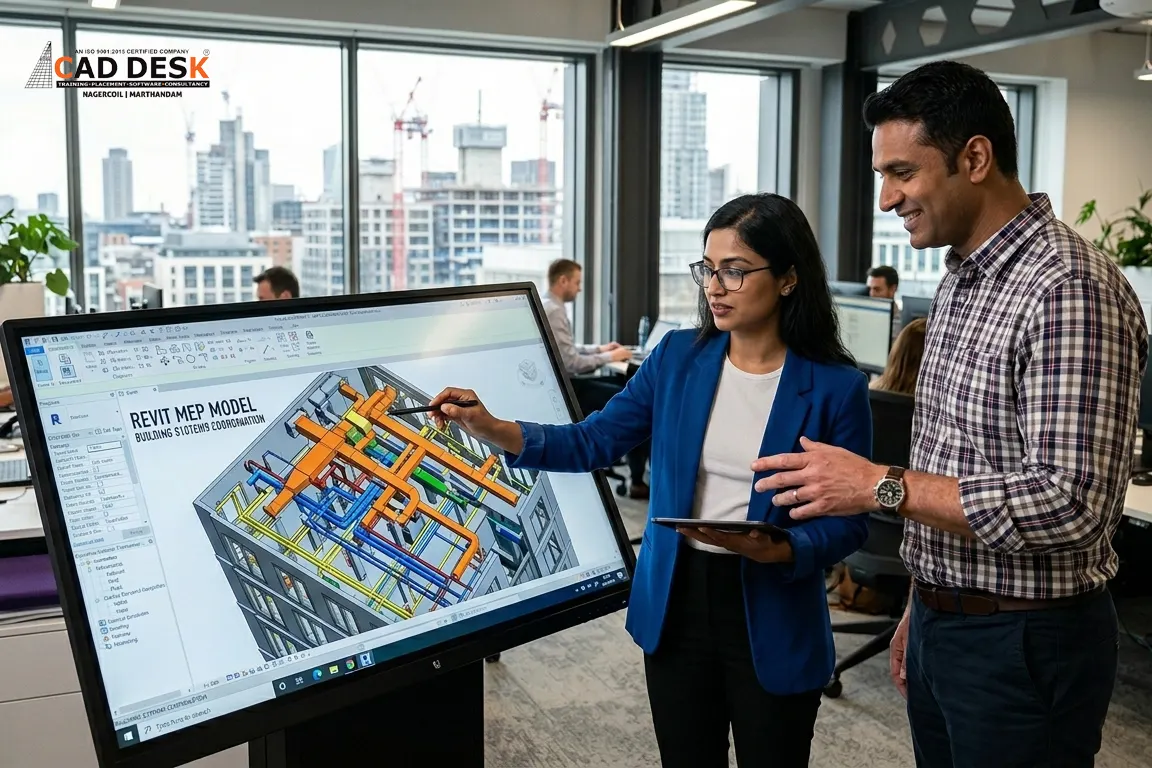
What Is Revit MEP? Why It’s Essential for Modern Building Design
Quick Summary:
1. Improves Design Accuracy – Helps engineers create precise 3D models for mechanical, electrical, and plumbing systems.
2. Reduces Construction Errors – Detects clashes early, avoiding costly mistakes during project execution.
3. Enhances Team Collaboration – Allows architects, engineers, and designers to work on a single coordinated model.
4. Supports Energy-Efficient Buildings – Enables better planning of HVAC and electrical systems for sustainable construction.
5. Speeds Up Project Delivery – Automates documentation and updates, saving time and improving workflow efficiency.
In today’s fast-changing construction industry, digital tools are transforming how buildings are designed and executed. In this blog, we will clearly explain what is Revit MEP, its core features, and why it plays a crucial role in modern building design. We will also look at how it is used in real-world projects across India and why learning it can improve your career opportunities in the AEC (Architecture, Engineering, and Construction) field.
What Is Revit MEP?
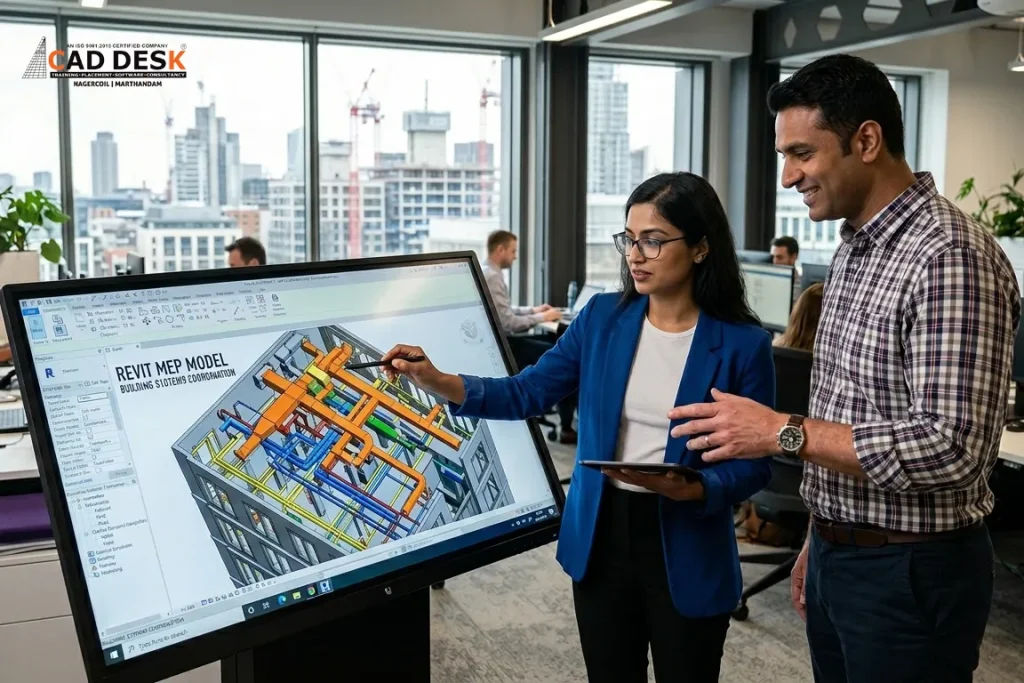
Revit MEP software is an advanced Building Information Modelling (BIM) tool developed by Autodesk, mainly used for designing Mechanical, Electrical, and Plumbing systems.
Unlike traditional drafting tools, Revit MEP allows engineers to work in a smart 3D environment. Every component in the model contains real data, which helps in better planning, coordination, and execution.
If you are new to the concept and wondering what is Revit MEP, it is essentially a technology that integrates all building services into one intelligent model, making the design process faster and more accurate.
Key Features of Revit MEP
1. Advanced 3D System Modelling
Revit MEP allows engineers to create highly detailed 3D models for HVAC systems, electrical layouts, and plumbing networks. This is not just visual—it helps understand how each system interacts within the building structure. Engineers can easily analyse airflow, pipe routing, and electrical connections.
2. Smart Parametric Components
One of the standout features is parametric modelling. Every element (like ducts, pipes, or fittings) can be adjusted dynamically. If one part changes, related components automatically update. This saves time and reduces manual rework.
3. Powerful Clash Detection and Coordination
In complex projects, systems often overlap. Revit MEP identifies these clashes early—like a pipe interfering with a beam or duct. This feature helps avoid costly mistakes during construction and ensures smooth project execution.
4. Real-Time Multi-Disciplinary Collaboration
Revit MEP allows architects, structural engineers, and MEP engineers to work on the same model simultaneously. This improves communication and reduces misunderstandings between teams.
5. Automated Documentation and Schedules
The software automatically generates detailed drawings, material schedules, and reports. Since everything is linked to the model, any update reflects instantly in documentation, ensuring accuracy.
6. Energy Analysis and System Performance
Revit MEP supports energy analysis tools that help design energy-efficient buildings. Engineers can simulate real-world performance, which is very useful for sustainable construction projects.
7. Cloud Integration and Data Management
With cloud support, teams can access models from different locations. This is especially useful for large-scale projects and remote collaboration.
Why Revit MEP Is Essential for Modern Building Design
1. Enables Efficient and Smart Building Design
Modern buildings are more complex than ever, with multiple systems working together. Revit MEP helps engineers design these systems in a coordinated way, ensuring everything functions smoothly.
2. Reduces Construction Errors Significantly
One of the biggest challenges in construction is design errors. Revit MEP minimises this risk by detecting issues at the design stage itself. This reduces rework and improves project timelines.
3. Saves Time and Project Cost
By automating tasks and improving coordination, Revit MEP speeds up the design process. Early issue detection also prevents expensive on-site corrections, saving overall project costs.
4. Supports Sustainable and Energy-Efficient Buildings
With increasing awareness about sustainability in India, energy-efficient design is becoming important. Revit MEP helps engineers create systems that optimise energy usage and reduce environmental impact.
5. Improves Communication Between Teams
In large projects, multiple teams are involved. Revit MEP acts as a central platform where all stakeholders can access updated information, ensuring better coordination.
6. Essential for BIM-Based Workflows
Many construction companies in India are now adopting BIM standards. Revit MEP is a key part of this ecosystem, making it an essential tool for modern building projects.
7. Ideal for Complex Infrastructure Projects
From hospitals to metro stations and IT parks, complex projects require precise planning. Revit MEP handles this complexity efficiently by integrating all systems into a single model.
Applications of Revit MEP in India
Revit MEP is widely used in various sectors across India:
- Residential buildings and apartments
- Commercial complexes and office spaces
- Hospitals and healthcare facilities
- Industrial and manufacturing units
- Smart city and infrastructure projects
As India continues to grow in infrastructure development, the demand for BIM and MEP professionals is increasing steadily.
Career Opportunities After Learning Revit MEP
Learning Revit MEP can open up multiple career opportunities in the construction and design industry:
- MEP Design Engineer
- BIM Engineer
- HVAC Design Engineer
- Electrical Design Engineer
- Plumbing Design Specialist
To gain practical knowledge and industry-ready skills, you can explore professional training programs like Civil CAD training in Nagercoil and Marthandam.
Conclusion
To conclude, understanding what Revit MEP is is very important for anyone interested in modern building design. It not only improves design accuracy but also enhances efficiency, coordination, and sustainability in construction projects.
As the Indian construction industry continues to adopt digital technologies, learning Revit MEP can give you a strong career advantage.
If you’re planning to start or upgrade your skills in Revit MEP, don’t hesitate to get in touch with our team for expert guidance.
Frequently Asked Questions
Revit MEP is a Building Information Modelling (BIM) software used for designing mechanical, electrical, and plumbing systems in buildings. It works by creating intelligent 3D models where every element carries real data. Engineers can design, analyse, and coordinate systems within a single platform. The software updates changes automatically across the model, ensuring consistency. This makes it easier to plan complex building systems and improve overall project efficiency from design to execution.
Revit MEP is important because modern buildings involve complex systems that must work together efficiently. It helps engineers design these systems accurately and detect issues before construction begins. This reduces errors, saves costs, and improves coordination among teams. With increasing demand for smart and sustainable buildings, Revit MEP plays a key role in delivering high-quality projects. It also aligns with BIM standards, which are becoming essential in today’s construction industry.
Revit MEP is mainly used for designing HVAC systems, electrical layouts, and plumbing networks in buildings. It helps engineers create detailed 3D models, analyse system performance, and generate accurate documentation. The software is widely used in residential, commercial, and industrial projects. It also supports energy analysis and system optimisation. Overall, it simplifies the design process and ensures better coordination between different building systems, making it a valuable tool in construction projects.
Revit MEP is ideal for engineering students, civil engineers, mechanical engineers, electrical engineers, and professionals working in the construction industry. It is also useful for architects and BIM professionals who want to improve coordination in projects. Anyone interested in building design or infrastructure development can benefit from learning this software. With the growing demand for BIM-based workflows, gaining skills in Revit MEP can help individuals stay competitive and improve their career opportunities.
To learn Revit MEP, basic knowledge of engineering concepts such as HVAC, electrical systems, or plumbing is helpful. Familiarity with CAD software can also make learning easier. Additionally, understanding building design principles and having problem-solving skills are important. However, beginners can also start with proper training and practice. With consistent learning and hands-on experience, anyone can master the software and apply it effectively in real-world projects.
Revit MEP differs from traditional CAD software mainly in its approach to design. While CAD focuses on 2D drawings, Revit MEP uses intelligent 3D models that contain detailed information about each component. It allows automatic updates, better coordination, and clash detection. Traditional CAD requires manual updates and is more prone to errors. Revit MEP improves efficiency, accuracy, and collaboration, making it a preferred choice for modern building design projects.
Revit MEP is used across multiple industries in India, including residential construction, commercial real estate, healthcare, and infrastructure development. It is commonly used in projects like apartments, office buildings, hospitals, malls, and industrial facilities. With the rise of smart cities and sustainable construction, many companies are adopting BIM tools like Revit MEP. This has increased its demand across both private and government projects in the Indian construction sector.
Yes, Revit MEP is suitable for beginners, especially with proper guidance and training. While the software has advanced features, many institutes offer beginner-friendly courses that cover the basics step by step. With regular practice, learners can gradually understand complex concepts. The key is to start with fundamentals like system modelling and gradually move to advanced features. Beginners who invest time in learning Revit MEP can build strong skills for future career growth.
After learning Revit MEP, individuals can explore roles such as MEP Design Engineer, BIM Engineer, HVAC Engineer, Electrical Design Engineer, and Plumbing Designer. These roles are in high demand in construction and infrastructure projects. Many companies prefer candidates with BIM knowledge, especially for large-scale projects. Learning Revit MEP can also open opportunities to work on international projects, offering better career growth and higher earning potential.
The time required to learn Revit MEP depends on the learner’s background and training method. For beginners, it usually takes 2 to 3 months to understand the basics with regular practice. Advanced concepts may take additional time depending on the depth of learning. Enrolling in a structured training program can speed up the process. Consistent practice and real-world project exposure are key to mastering the software efficiently.