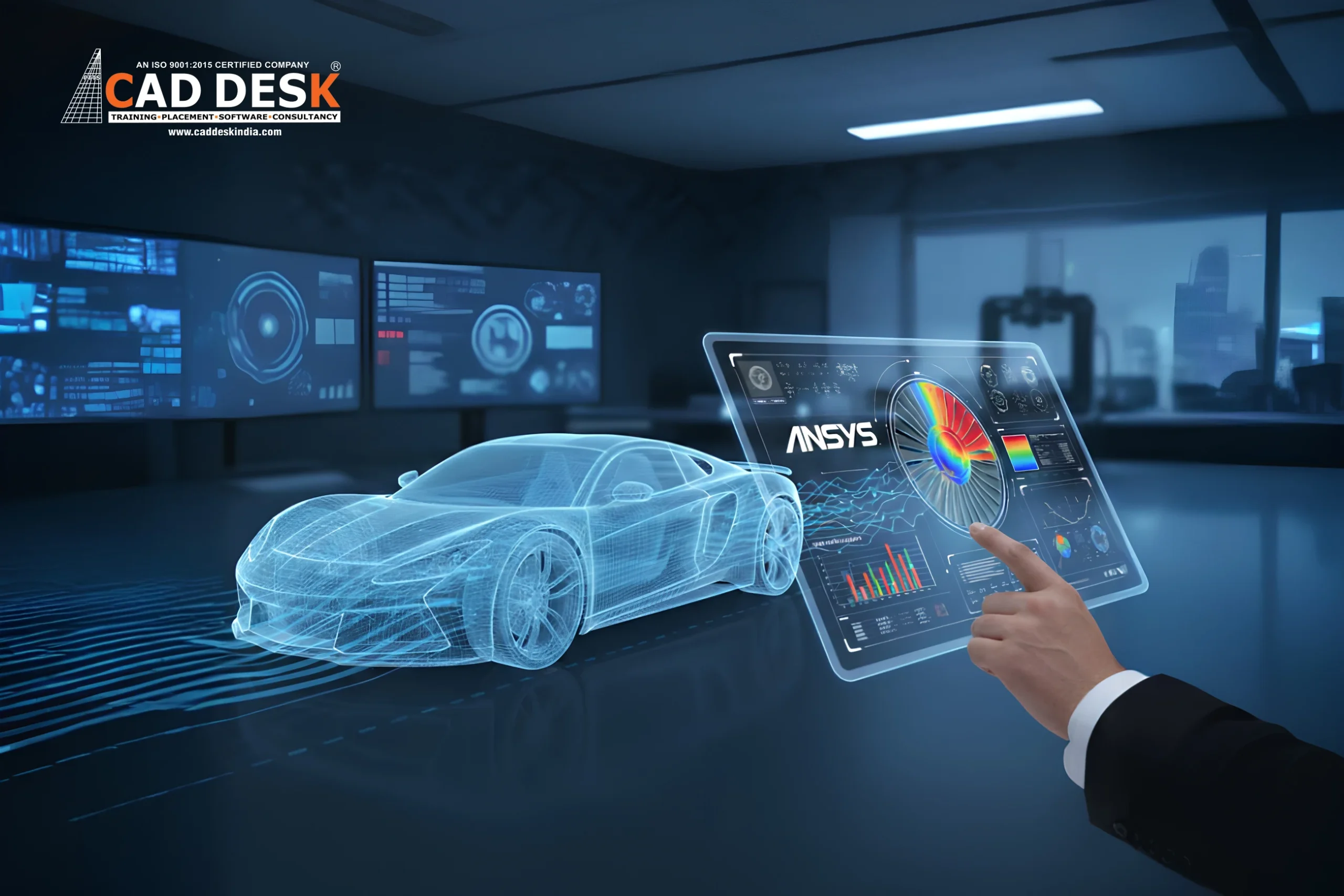
How Simulation Software Like ANSYS Improves Product Design
Quick Summary:
1. Replaces Physical Prototypes – Uses high-fidelity virtual testing to reduce costly physical models and early-stage failures.
2. Accelerates Design Innovation – Enables rapid iterations and faster product development cycles.
3. Improves Engineering Accuracy – Validates structural, thermal, fluid, and electromagnetic performance digitally.
4. Reduces Manufacturing Risk – Identifies design flaws before production begins, lowering rework and recalls.
5. Enhances Product Quality – Delivers safer, more reliable, and performance-optimised products through data-driven simulation.
In today’s fast-moving engineering and manufacturing environment, companies need smarter ways to design better products with less risk and lower cost. This blog explains how digital simulation tools are changing the way products are designed, tested, and improved. Simulation software like ANSYS improves product design by replacing costly physical prototypes with high-fidelity virtual testing, allowing engineers to validate structural, thermal, and electromagnetic performance early. It accelerates innovation through rapid design iterations, reduces manufacturing costs, and enables complex multiphysics simulations that predict real-world behaviour, resulting in safer, more efficient, and higher-quality products.
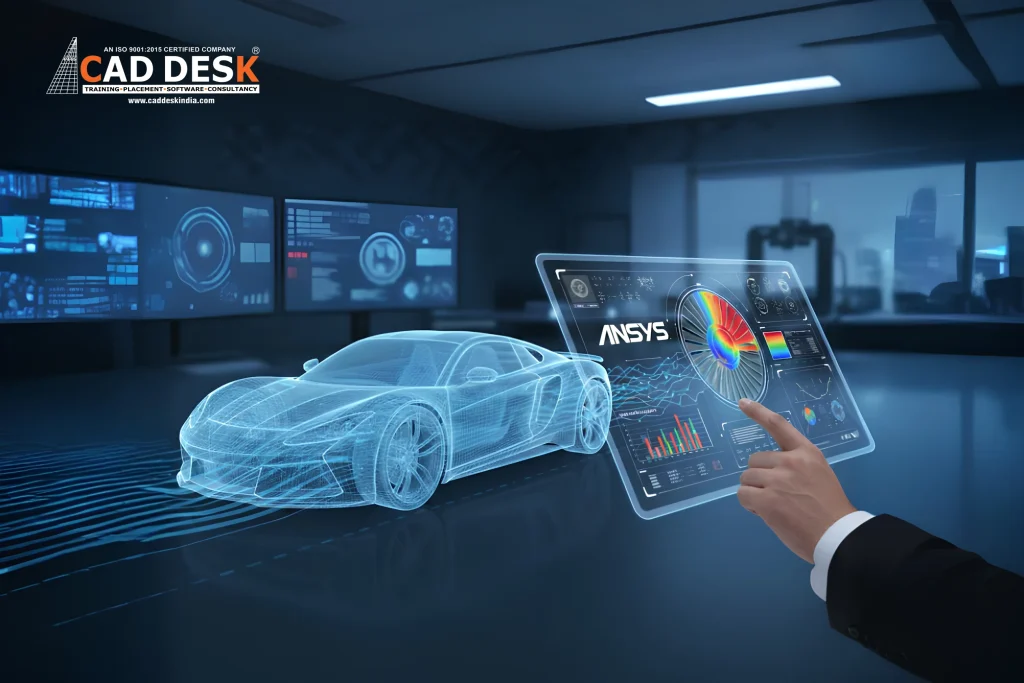
The Growing Importance of Simulation in Product Design
Traditional product development depended heavily on physical prototypes and manual testing. This approach was slow, costly, and often resulted in late-stage design failures. Today, simulation tools allow engineers to test products digitally before manufacturing even begins.
Using Ansys simulation software, engineers can analyse product behaviour under real-world conditions like pressure, heat, load, vibration, and motion. This helps identify design problems early, making development faster, safer, and more reliable.
For Indian industries facing cost pressure, market competition, and tight delivery timelines, simulation has become a practical necessity rather than a luxury.
What Is Engineering Simulation?
Engineering simulation means using software to recreate real-life conditions on a digital model of a product, allowing engineers to test how it will behave before building it physically. With engineering simulation software, teams can check product strength, analyse heat flow, test fluid movement, predict failures, improve durability, and optimise material usage. This digital approach reduces dependency on physical testing, lowers development costs, and significantly improves overall design accuracy and reliability.
Simulation works best when it is supported by strong design foundations and the right engineering tools. Choosing the correct design software plays a major role in building accurate simulation models. Civil and mechanical engineers often face confusion while selecting the right platforms for design workflows. If you’re working in infrastructure or civil engineering projects, this detailed guide on AutoCAD vs Civil 3D for civil engineers explains the differences clearly and helps in choosing the right design tool for better project planning and digital simulation readiness.
How Simulation Software Improves Product Design
This is where simulation delivers real business value. Let’s understand how simulation software improves product design through practical, real-world engineering applications:
1. Identifying Design Problems at an Early Stage
One of the biggest challenges in product development is late-stage failure. When defects are discovered after manufacturing starts, fixing them becomes extremely expensive and disruptive. Simulation helps engineers detect issues during the design phase itself.
Digital analysis highlights Stress concentration points, Weak structural zones, Thermal overload areas, Flow blockages, Poor material performance. This allows engineers to redesign components before any physical production begins. Early problem detection improves product reliability and reduces business risk significantly.
2. Improving Product Performance Through Virtual Testing
Simulation enables performance optimization without physical testing. Engineers can test multiple design variations digitally to find the best combination of shape, material, and structure.
Virtual testing helps improve Efficiency, Strength, Weight balance, Thermal stability, Structural integrity. This practical approach is one of the strongest examples of how simulation software improves product design in real engineering environments.
3. Reducing Physical Prototypes and Testing Costs
Physical prototypes require raw materials, skilled labour, machine time, logistics, and testing infrastructure. All of this increases product development cost. Simulation reduces dependency on physical models by validating designs digitally.
With simulation Multiple design concepts are tested virtually, Weak designs are eliminated early, Only validated designs go for prototyping, Fewer physical models are required, Testing becomes more targeted and efficient
This means companies no longer waste money building prototypes that fail basic performance standards. Instead, physical testing becomes a final validation step rather than a trial-and-error process. For Indian manufacturers, this is especially important where budget control and cost efficiency are critical for business sustainability.
4. Faster Product Development Cycles
Traditional development cycles are slow because each design change requires a new prototype. Simulation removes this delay by enabling instant digital modifications and re-testing.
Engineers can Modify designs instantly, Test performance in real-time, Compare multiple versions quickly, Finalise designs faster, Move to production sooner
This shortens product development timelines significantly. Faster development means faster market entry, better competitiveness, and improved business agility. In fast-moving markets like India, this speed advantage is a major business benefit.
5. Supporting Smart Engineering Decisions
Simulation transforms engineering from experience-based decisions to data-driven decisions. Instead of assumptions, engineers rely on digital analysis and performance data.
Simulation provides Visual performance models, Stress and load distribution maps, Temperature flow patterns, Failure prediction data, Performance comparison reports
With engineering simulation software, engineering teams gain clarity and confidence in design decisions. Management teams also benefit because decisions are supported by technical data, not guesswork. This creates smarter engineering planning, better investment decisions, and improved project success rates.
6. Real-Life Industry Applications
Simulation is already transforming multiple Indian industries by improving design quality, performance, and reliability across sectors. In manufacturing, it is used to enhance machine components, reduce wear and tear, and extend equipment lifespan. In the automotive and EV sector, simulation supports crash testing, battery performance analysis, structural safety validation, and aerodynamic optimisation. In construction and infrastructure, it helps with load analysis, structural stability assessment, and safety compliance. In electronics and consumer products, simulation improves heat management, durability testing, and long-term performance reliability. For industrial equipment, it enables vibration analysis, fatigue testing, and operational efficiency improvement.
Conclusion
Simulation software is transforming how products are designed, tested, and improved. From early problem detection and performance optimization to faster development and smarter engineering decisions, digital simulation has become a core part of modern product development.
Advanced tools like engineering simulation software and platforms such as ANSYS help organisations build stronger, safer, and more reliable products. Most importantly, they clearly demonstrate how simulation software improves product design in real-world engineering practice.
For students and professionals who want to build practical expertise in this field, CADDESK in Nagercoil and Marthandam offer hands-on ANSYS training focused on real-time projects and industry use cases. This helps learners not just understand simulation concepts, but also apply them confidently in actual engineering environments.
If you’re looking to adopt simulation technology, improve design quality, or upskill with practical knowledge, the right training and guidance can make the journey much easier.
Frequently Asked Questions
Simulation software improves product design by enabling engineers to digitally test performance before manufacturing begins. It helps identify structural weaknesses, thermal issues, and performance limitations early in the design phase. This reduces errors, prevents costly redesigns, improves safety, and ensures that products meet real-world performance standards before production.
Simulation software in engineering is a digital technology used to model real-world physical conditions such as stress, heat, pressure, vibration, and motion on virtual product designs. It allows engineers to predict how a product will behave in actual operating environments without building physical prototypes, making development more efficient and accurate.
Virtual testing is better than physical testing because it is faster, more cost-effective, and more flexible. Engineers can run multiple tests on different design versions without material waste, production delays, or equipment costs. It also allows testing under extreme conditions that may be unsafe or impractical to create physically.
Industries such as manufacturing, automotive, EV, construction, electronics, infrastructure, industrial equipment, and heavy engineering benefit the most. These sectors rely on simulation to improve product safety, durability, efficiency, and reliability while reducing development risks and production costs.
Yes, simulation software significantly reduces development costs by minimising the number of physical prototypes, preventing design failures, reducing material wastage, lowering testing expenses, and avoiding late-stage production changes. It also improves resource efficiency and project planning.
Simulation improves product safety by digitally testing designs under extreme stress, pressure, heat, and environmental conditions. It helps identify failure points, structural weaknesses, and safety risks before manufacturing, ensuring that products meet safety standards and operate reliably in real-world conditions.
Multiphysics simulation is a digital approach where multiple physical forces such as mechanical stress, thermal flow, fluid dynamics, vibration, and electromagnetic effects are tested together. This allows engineers to understand how different forces interact in real-life conditions, leading to more accurate and reliable product designs.
Yes, simulation software is highly useful for small businesses and startups because it reduces development risks and costs. It allows small teams to validate designs digitally, avoid expensive mistakes, improve product quality, and compete with larger companies through smarter engineering practices.
Simulation speeds up product development by enabling rapid digital design changes, instant testing, and quick validation. Engineers can test multiple versions without waiting for physical models, which shortens development cycles, accelerates decision-making, and enables faster market entry.
Simulation plays a critical role in modern engineering by supporting data-driven design, reducing uncertainty, improving innovation, and enhancing product reliability. It helps organisations move from trial-and-error development to intelligent, predictive, and digital-first engineering processes.